
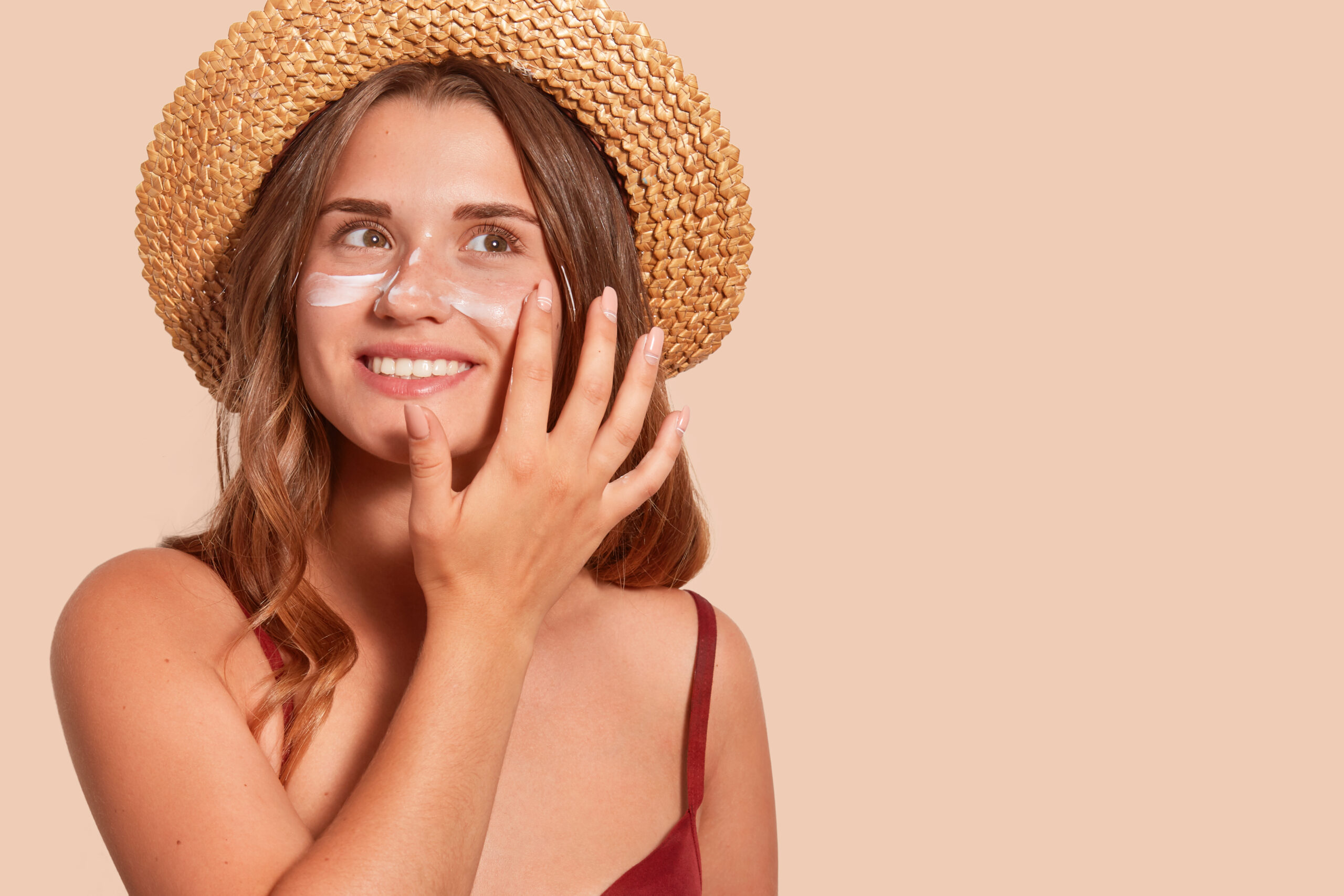
Most people believe wearing sunscreen is just for the beach or sunny days, but it is honestly a daily essential. Wearing sunscreen is indeed one of the best ways to protect the skin from the sun. Sunscreen is essential in reducing skin damage and cancers caused by UV radiation. Damage from UV radiation can cause photoaging, resulting in wrinkles and sagging, as well as photo-carcinogenesis, which damages cells and DNA. Here are five ways sunscreen saves your skin.
1. Sunscreen protects against premature aging
The skin’s dermis contains collagen, elastin, and other fibers that support the skin. UVA rays damage collagen fibers, causing the production of abnormal elastin, which produces enzymes called metalloproteinases. These enzymes, which typically rebuild collagen, ultimately break down collagen fibers, thereby leading to leathery skin. Repeated exposure to ultraviolet radiation, particularly UVA rays, can lead to premature aging, characterized by wrinkles, discoloration, and pigmented skin. Photoaging, a detrimental effect on the skin caused by ultraviolet radiation, can significantly impact one’s quality of life and increase the risk of skin cancers. Studies have shown that broad-spectrum high SPF (sun protection factor) sunscreen reduces photoaging. Dermatologists usually recommend a broad-spectrum sunscreen of at least 30; Sunscreen of 50 is a higher protection. Higher SPF values only add minimal protection beyond SPF 60; therefore, reapplication is what truly protects the skin.
2. Sunscreen protects the skin against sunburn
Sunburn from UV radiation usually appears as redness, inflammation or blistering of the skin. Studies have shown that broad-spectrum, high SPF sunscreen protects against sunburn. SPF protects against UVB, while broad-spectrum also ensures protection against UVA rays. The sun emits UV rays, which are UVA rays and UVB rays, and they damage the skin in separate ways. UVB rays cause sunburn. We must protect our skin from UVB rays because they can also cause skin cancer. The good thing is sunscreen blocks UV rays before they penetrate the skin. There are several types of sunscreens, which we will talk about in the future. One important thing is to reapply sunscreen every two hours or after sweating and swimming.
3. Sunscreen keeps skin healthy
Sunscreen helps overall skin health beyond protecting it from premature aging and sunburn. Sunscreen can provide additional benefits, such as preventing uneven skin tone, dark spots, and hyperpigmentation. When these are prevented, it naturally gives the skin a clearer, more even complexion. Furthermore, sunscreen helps the skin stay protected while it is healing from acne, scars, and while using other cosmetic treatments like retinoids and peels. It also prevents the skin from inflammation. Daily use of a broad-spectrum sunscreen of SPF 30 or higher is necessary to see its benefits.
4. Sunscreen lowers the risk of skin cancer
Skin cancer, particularly melanoma, is the 17th most diagnosed cancer worldwide. Regardless of how discouraging this is, it is preventable. Sunscreen protects the skin from the long-term risk of skin cancer. Studies show that the use of sunscreen reduces the risk of squamous cell carcinoma (SCC) developing and lowers the risk of melanoma. Both the Canadian Dermatology Association and the American Academy of Dermatology recommend using sunscreen to prevent skin cancer. Using sunscreen is not just for cosmetic benefits but also for health benefits.
5. Sunscreen protects the skin’s barrier
The outermost layer, the epidermis, protects the body from the external environment. It helps maintain proper moisture within the body and protects against infections and irritants. UV rays damage the epidermis; However, sunscreen helps to protect it. It helps prevent dryness and protects the skin barrier, which aids in its function of protecting against infections and irritants. Remember to use a broad-spectrum sunscreen of SPF 30 or higher frequently, at least every 2 hours, when outside.
References
- Gabros, S., & Zito, P. M. (2019). Sunscreens And Photoprotection. Nih.gov; StatPearls Publishing. https://www.ncbi.nlm.nih.gov/books/NBK537164/
- Grabel, A. (2019, January 10). Photoaging: What You Need to Know About the Other Kind of Aging – The Skin Cancer Foundation. The Skin Cancer Foundation. https://www.skincancer.org/blog/photoaging-what-you-need-to-know/
- Lim, K.-M. (2021). Skin Epidermis and Barrier Function. International Journal of Molecular Sciences, 22(6), 3035. https://doi.org/10.3390/ijms22063035
- National Academies of Sciences, E., Division, H. and M., Studies, D. on E. and L., Policy, B. on H. S., Toxicology, B. on E. S. and, Board, O. S., & Usage, C. on E. I. of C. M. S. and P. H. I. of C. in S. (2022, August 9). Sunscreen, Preventive Health Behaviours, and Implications of Changes in Sunscreen Use for Public Health. Www.ncbi.nlm.nih.gov; National Academies Press (US). https://www.ncbi.nlm.nih.gov/books/NBK587264/
- Sander, M., Sander, M., Burbidge, T., & Beecker, J. (2020). The Efficacy and Safety of Sunscreen Use for the Prevention of Skin Cancer. Canadian Medical Association Journal, 192(50), E1802–E1808. National Library of Medicine. https://doi.org/10.1503/cmaj.201085
- World Cancer Research Fund. (2024, October 4). Skin cancer statistics | world cancer research fund. World Cancer Research Fund. https://www.wcrf.org/preventing-cancer/cancer-statistics/skin-cancer-statistics/