
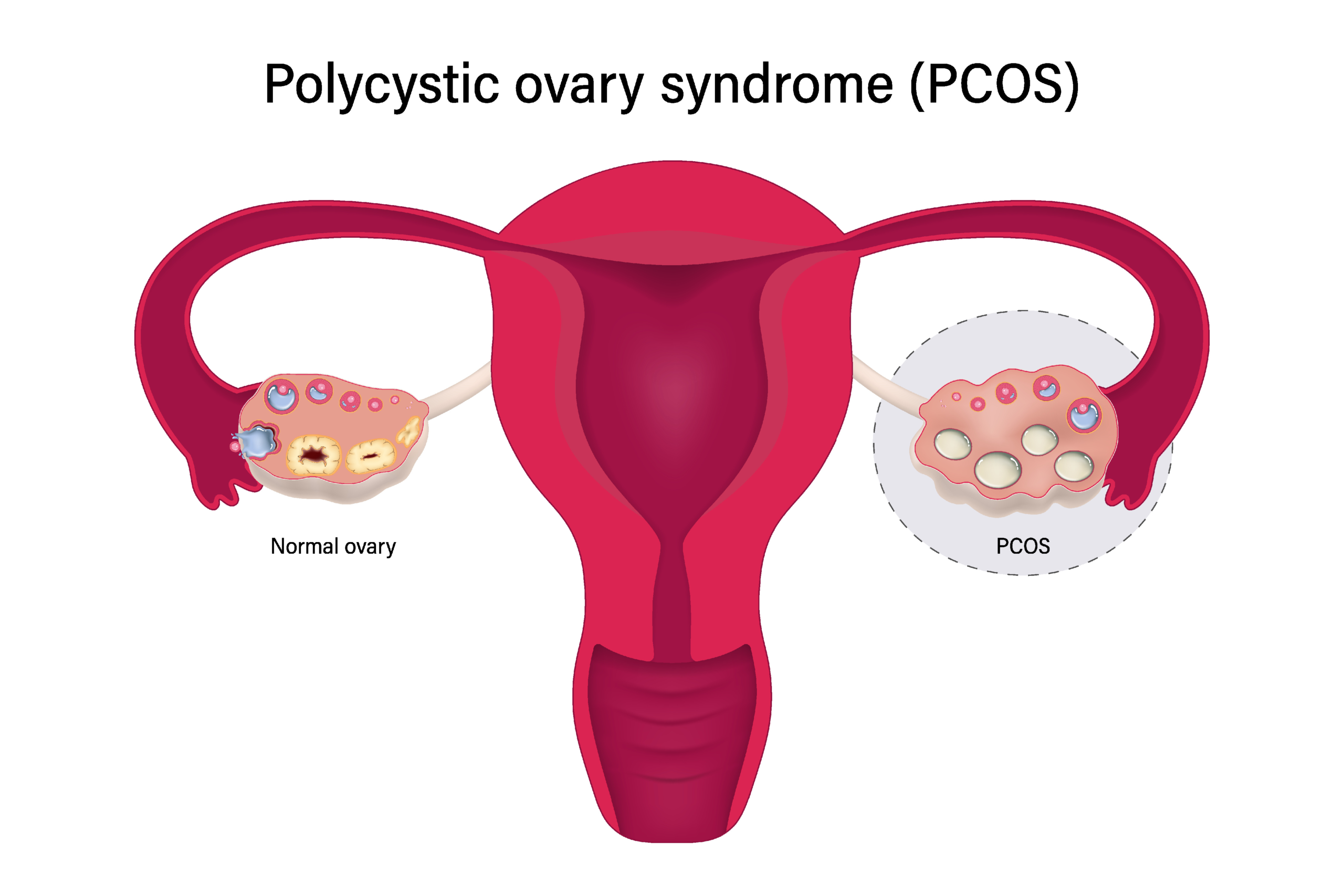
Polycystic Ovarian Syndrome (PCOS) is a hormonal imbalance that occurs during reproductive years among women, characterized by irregular menstruation and the presence of cysts in the ovary. PCOS can affect hormonal levels, especially Elevated androgen levels, insulin resistance, and irregular ovulation. PCOS can impact your mental health and wellness, thereby affecting your quality of life. It affects both the physiological and psychosocial aspects of an individual. We’re going to delve into how it affects your mental health and wellness through busting myths.

PCOS Only Affects Your Hormones and Fertility, Not Your Mental Health
The truth is that PCOS affects women’s mental health and well-being, with many patients experiencing anxiety and depression. Studies show that PCOS slightly increases anxiety and depression. The hormonal imbalance from PCOS, particularly irregular periods, has been shown to affect your mood, thereby increasing the risk of depression and anxiety. Issues with body image also play a role in mental health. PCOS can really affect your weight, and overthinking it can really affect your mood. Overall, PCOS may feel like a battle you can’t win, but there are ways to manage it. We will discuss this further in the upcoming topics.
Key Highlights
- PCOS affects women’s mental health and quality of life.
- Hormonal imbalance and issues with body image from PCOS may play a role in your mood.
- Dealing with PCOS may be overwhelming, but there are ways to manage it

Weight Loss Will Cure All Symptoms of PCOS, Including Mental Health Issues
Lifestyle changes certainly have a positive effect on your wellbeing, but PCOS is a chronic lifelong condition that can be managed, not cured. Weight loss of just 10% can lead to a significant improvement in PCOS symptoms. It may improve your mood, but it does not cure mental health issues. Mental wellness strategies, including therapy, self-love, and stress reduction, are just as essential as a balanced diet and regular exercise.
Key Highlights
- PCOS is a chronic lifelong condition that can be managed, not cured.
- Therapy, self-love, and stress reduction are just as essential as a balanced diet and regular exercise.

You’re Alone in This
The truth is, you are not alone in this. Today, about 1 in 10 women around the world are diagnosed with PCOS. Reaching out to a doctor, therapist, or nutritionist is a sign of strength and resilience. Many women around the world are thriving with PCOS through self-care and managing the symptoms. PCOS may feel overwhelming, but you’re not powerless. Knowing that you can take control of your health empowers you to become a better you. We are here to support you in achieving your goal of becoming a better you. Growth takes time, and you don’t have to do it alone. Stay tuned. More resources and guidance are coming your way.
Key Highlights
- About 1 in 10 women around the world are diagnosed with PCOS.
- You can thrive with PCOS through self-care and managing the symptoms.
Reference
Chaudhari, A. P., Mazumdar, K., & Mehta, P. D. (2018). Anxiety, Depression, and Quality of Life in Women with Polycystic Ovarian Syndrome. Indian Journal of Psychological Medicine, 40(3), 239–246. https://doi.org/10.4103/IJPSYM.IJPSYM_561_17
Deswal, R., Narwal, V., Dang, A., & Pundir, C. S. (2020). The Prevalence of Polycystic Ovary Syndrome: A Brief Systematic Review. Journal of Human Reproductive Sciences, 13(4), 261–271. https://doi.org/10.4103/jhrs.JHRS_95_18
Dewani, D., Karwade, P., & Mahajan, K. S. (2023). The Invisible Struggle: The Psychosocial Aspects of Polycystic Ovary Syndrome. Cureus, 15(12), e51321. https://doi.org/10.7759/cureus.51321
Mayo Clinic. (2022, September 8). Polycystic Ovary Syndrome (PCOS) – Symptoms and Causes. Mayo Clinic. https://www.mayoclinic.org/diseases-conditions/pcos/symptoms-causes/syc-20353439
Watson, S. (2020, October 20). Polycystic Ovary Syndrome (PCOS) and Weight Gain. WebMD. https://www.webmd.com/women/polycystic-ovary-syndrome-pcos-and-weight-gain